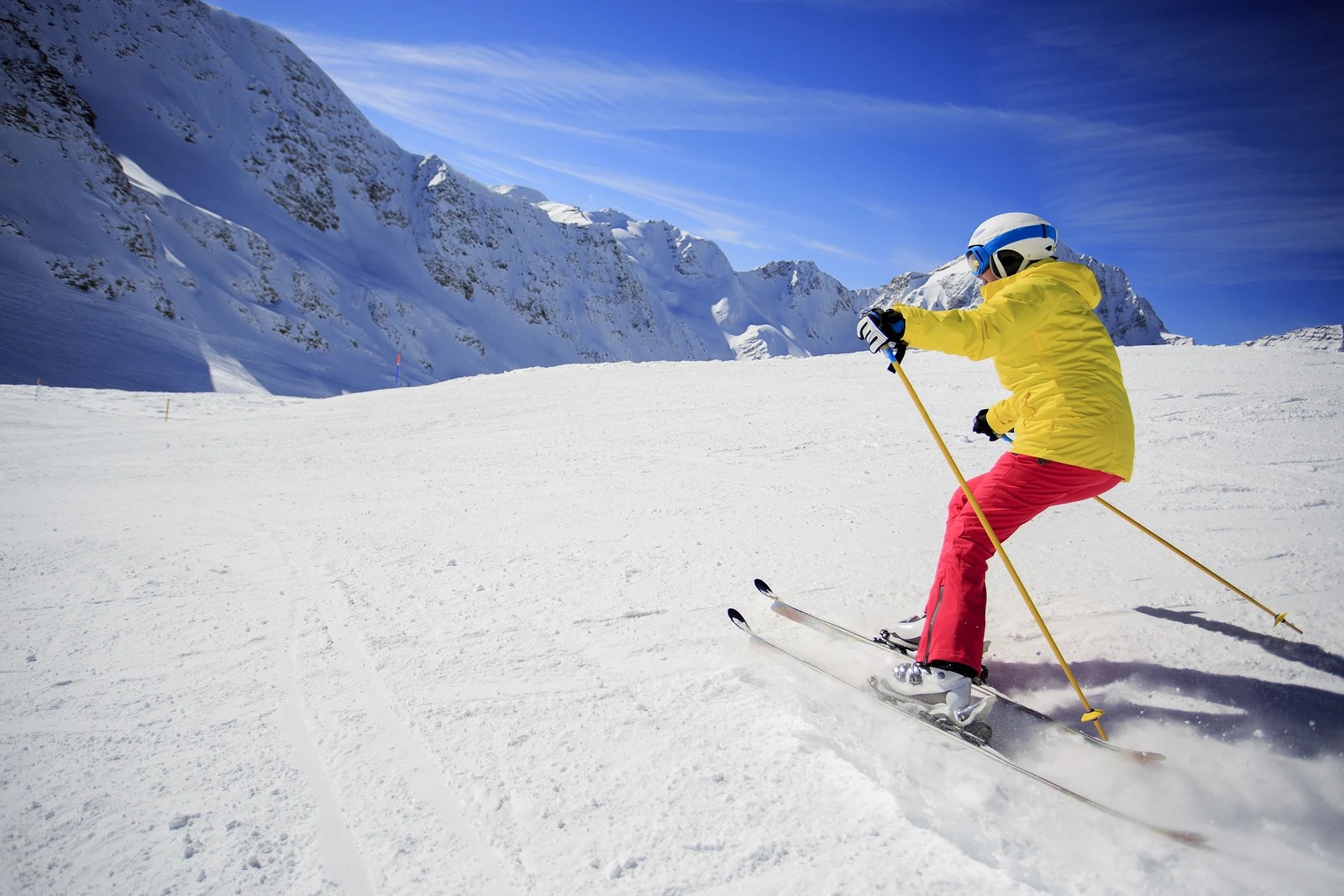
Skiing Is Better Than Snowboarding. This might seem like a reason not to shred but hear me out. Snowboarding equipment is much more portable and therefore easier to manage.
5 reasons why skiing is better than snowboarding Alps2Alps Transfer Blog from www.alps2alps.com Observing a Betta
The betta is also referred to in the same way as Siamese fighting fish. The species is indigenous to Southeast Asia, including Cambodia, Laos, Myanmar, Thailand, and Vietnam. It is an exotic fish that favors the freshwater aquarium with a top-quality gravel substrate. It is renowned for its beautiful colors and is considered to be a wonderful pet for people who are just starting out.
Looking at a betta
Being able to observe a betta's behavior will help you to understand the nature of its behaviour. Bettas are naturally interested in the world around them. Any sudden change could attract their attention. They also have a habit of staring. They are prone to stare at any moving object that could be in the form of food or a predator.
You can observe the betta's behavior by placing it inside a tank with another Betta. Make sure you keep both the temperature and level of lighting similar. If possible, keep an eye on the fish 30-60 minutes each day. The playing of classical music may aid. When observing a fish, you should look for behaviors that suggest that they are content and healthy.
A healthy betta is likely to swim throughout the tank on regular schedule, communicating with its environment. It could be a lazy swimmer, or it may move swiftly from one side of the tank to the other. On the other hand it is possible that a betta with a bad health condition will sit at the bottom the tank, and not show indicators of happiness.
A betta's behavior is determined by the kind of stress it endures. When the fish senses a threat, they might respond up in anger. This is their way to take away the threat. They may flail at different animals or their reflection. However, while this is stressful for your betta, minor instances with flares can be managed.
Looking at a wild betta
It can provide a fascinating experience. They are extremely curious and love to explore their environment. Although they're simple to look after however, you could be amazed by some of their unusual behaviors. Here are some of the indicators you might notice when you spot one in its natural environment:
Bettas are predators and typically prey for other wildlife, so they are always aware of movements in the area. This means that they are extremely alert, and can keep their eyes fixed while watching. While you're looking at the fish, keep an eye out for any aggressive behavior that you observe.
If you're interested in watching the wild betta, you'll need to know their habitat. Bettas live in heavily structured areas, so they don't require much space. They spend most of them hiding in the vegetation. Their fins are tiny, they are difficult to notice. Additionally, their muddy brown hue makes them difficult for you to notice.
A different sign of aging the bettas are their lethargy. Young bettas are expected to be active, but if they look tired, they could be suffering from a disease. Also, they might not be as enthusiastic about food as they used to be. You should also notice the decrease in their wiggle dances.
Watching a captive betta
The experience of watching a captive betta fish is one of the best ways to instruct learners about the biology behind bettas. Bettas are tropical species that prefer water that is 72 to temperatures of 82°F. They are in trouble with cold water since it makes them tired and weakens the immune system. Regular water changes can stress them out. Their name is derived directly from their Malay phrase "betah," which means "fighter," referring to their resilience in water that is unsuitable for human consumption.
You can observe a beta's behavior while in the aquarium and find out what makes it move better or behave in the same way. It is also possible that you study the reactions it has to various environments, like heat or rocks. It is also possible to ask pupils to run their own experiments. They can come up with predictions of how the fish will behave in any given situation.
Another method to learn about bettas can be to observe their eating habits. Bettas prefer floating pellets over fish flakes. They also require coming up to the surface for replenishment of their labyrinth, and they do not like an aquarium that has a sunk bottom.
Bettas are often housed in smaller aquariums, but there are certain factors to remember when caring for one. Bettas are very susceptible to numerous common freshwater fish diseases. These include ich. This is also known as White Spot Disease, caused by the Ichthyophthirius multifiliis parasite. This parasite can be found in numerous freshwater aquariums for fish. If this parasite is found in the fish, it results in white spots on its body that are visible. The fish may also clench its fins or hang listlessly on the surface of the water.
Feeding a betta
Bettas require access to the water in order to breathe. The labyrinth of organs on the body of the betta is able to take oxygen out of air. This means you don't need to buy an air pump to keep your pet happy and healthy. They also require enough space to be able to hide in and swim. The larger the tank, the more space it will have.
Bettas can consume as much as 3 pellets per meal. consume food, therefore you'll need be sure to prepare enough food items. It's also vital to take the time to soak dry food items prior. In feeding your beta the appropriate amount is crucial to its health and well-being.
The excess food you feed your betta could cause digestive problems. If your betta is fed too frequently, they'll experience constipation which could lead to a variety of health problems. They may also appear unmotivated and spend a lot of the day in a semi-sleepy state. This could suggest that your betta may be suffering from SBD or is eating too much.
When you are choosing what food to serve your bets, make certain that you find a food that is high in nutrients and free the harmful bacteria. Brine shrimp and bloodworms are frequent in ponds as well as pools , and make a great choice for feeding your betta.
Monitoring a betta while in captivity
Being able to observe a betta's behavior in its tank can be an interesting experience. You will learn more about the animal's behavior as well as its response to various types of stimuli. You can also draw an image of a betta and write about its characteristics, measurements, and color. You can also compare the characteristics of a male and female betta to see the way they feed. In addition, you can be able to observe how various types in food affect the behavior exhibited by bettas.
Bettas don't live in large swimming pools. They are more at home in smaller, enclosed spaces. Their habitat is a small body of waters, that are rich in vegetation. They spend most times of their lives hidden among the plants. This means they're in constant contact with dirt and leaves.
Bettas are native to watery, shallow habitats across Southeast Asia. This makes them adapted to living in tiny quantities of low oxygen water. Bettas have evolved to survive in these situations by developing an organ that is called Labyrinth that allows them to breathe air through the skin. Their diet is comprised of insects and their larvae.
Bettas are serene, however they could even fight with other fish. If you don't want to disrupt the peaceful life of your male Betta the best option is to place them in separate tanks. A male Betta can be a threat to another male in the vicinity.
Observing a betta in the wild
A betta's observation in its natural habitat is a wonderful way to study how it conducts itself in the wild. Bettas are territorial creatures. They will fight to establish their territory. No matter if female or male Bettas tend to ram or dive into other fish. They can also attack the fins on other fish. To stay safe Bettas require an enticing shelter. An aquatic cave or densely planted corner can be a ideal location for them.
You can watch a betta's behaviour to find out how happy or stressed it is. If it's stressed out, it might spit, flake its fins or in some other way react to the presence of you. If the fish is unsatisfied and bored, the fish may even be aggressive.
The betta is a decorative species of fish that is popular around the world. The large fins of the betta will draw attention. The Fish's natural aggression is what makes them well-known as "fighting fish." Be aware of their behaviour to help you determine their general health and the state of mind of an individual fish while being fed.
The most important thing that you need to remember when looking for a betta the wild is that you observe the animal with keen attention. Bettas come in many colors as well as the most popular being black, yellow, blue albino, clear, and. The male betta is usually brighter than the female. Their fins could vary in length, and males often have bigger fins than females. There is also a distinctive tail that may be rotting.
The highest speed ever recorded on a snowboard is 126mph (203km/h). Skiing is usually more fun in the beginning because it’s easier to learn. Skiing is way faster and will take you higher and further than snowboarding!
11 Reasons Why Skiing In Europe Is Better Than In North America.
One of the main reasons why skiing is better than snowboarding is that it is easier to learn. However, the highest speed on skis is recorded as 157mph (254km/h). Yes, this is not just a stubborn assumption to pour oil in the fire, it actually is scientifically proven.
Another Reason That Snowboarding Is Better Than Skiing Is That You Don’t Have To Deal With As Much Equipment.
Skiing is much easier to become accustomed to as both legs move independently and you travel with your body facing the same way as your feet. These are typically wider than other kinds of skis, making it easier for you to balance and less likely that you’ll sink into the snow. Snowboarders are more probable to suffer.
People Generally Tend To Be Pretty Good On Piste Before Venturing Off Into The Powdery.
When a snowboard rider falls, the edge of the snowboard drags on the snow and acts like a brake. Here’s 19 reasons why snowboarding is better than skiing. The highest speed ever recorded on a snowboard is 126mph (203km/h).
Is Snowboarding Better Than Skiing?
Sorry skiers, the snowboarders win this one hands down. This might seem like a reason not to shred but hear me out. There are a number of theories offering a.
A Research Study Performed By The National Ski Areas Association In The U.s.
Snowboarding gets very fun over time when you learn to edge control and it all ‘clicks’. On the one hand the natural basic position of skiing and on the other hand, the tools. Snowboarding is harder to learn than skiing.
Share
Post a Comment
for "Skiing Is Better Than Snowboarding"

Post a Comment for "Skiing Is Better Than Snowboarding"